Voices from the edge.
Searching for Mandela. entry 6. Rondebosch

In writing about South Africa I aim to convey a mix of affection and hope and dismay. In all encounters, including the ones reported below, identities have been disguised. But each reported conversation is based on words spoken by an actual person, then entered in my notebook the same day. I have not created composite characters.
There is great pleasure in returning to places you haven’t seen for decades and finding some details exactly as you remember. I wandered around Rondebosch sniffing out traces of my lost youth. Black and brown students thronged the pavements, all dressed in the height of cool and with jeans worn as low as anatomically possible. Mingling with mixed-race crowds in this place was a novelty to me, because during my time here (Another time? Before-time? Once-upon-a-time?) students had been whiter and roads less crowded. I was in a time-warp. To everyone around me this was life as normal, but for time-traveller me it was a transformed world.
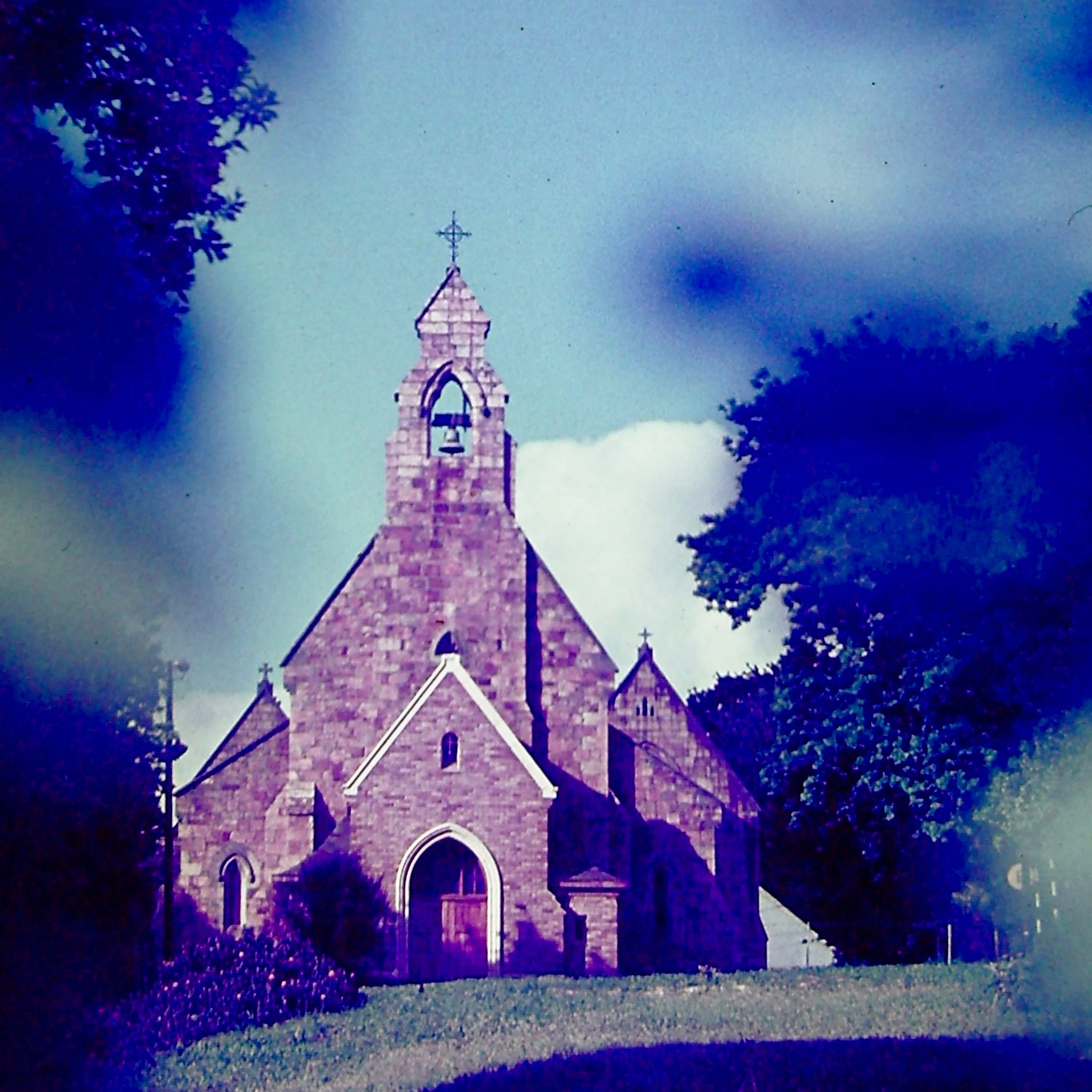
Across the road and veiled by oak trees stood the golden sandstone walls of St Paul’s Church, once my grandmother’s place of worship. Jeannie and I strolled up to have a look. A ragged man was sleeping on the front steps and a small boy led a blind man along the path.
Neither the blind man nor the sleeping drunk seemed likely to spring into mugger-mode, but away from the reassuring presence of crowds I found myself walking faster and glancing around in what was supposed to be an alert-yet-confident manner. OK, it sounds pathetic, but such was the effect of dire warnings I’d absorbed about life in the Republic of Paranoia.
Anxiety seeps into almost every corner of South African life. African warmth is being chilled by fear of human predators. Personal security is a dominant concern, and even casual acquaintances felt the need to educate us with a catalogue of gruesome stories. In one conversation a man asked Jeannie: ‘How many friends of yours have been raped or murdered or carjacked?’ then followed up with, ‘In my case, twenty.’
We were strongly encouraged to learn local habits. The safety list was lengthy. Never walk near any clump of bushes, never stop your car where groups of young men congregate. Always lock doors, always keep car windows closed, never use commuter trains unless in a group of ten or more, walk as little as possible and never alone, never let any stranger approach too closely, be careful when entering a house on your own. When you have to be away from your car walk rapidly and with resolute confidence. Always be aware of what is happening around you, never do anything that could provoke a reaction, always make provision for a quick getaway. After a few days in the republic, glancing over my shoulder became an involuntary reflex, like brushing away flies in outback Australia.
Razor wire now dominates urban landscapes. This horrible stuff hadn’t even been invented last time I looked, but now the country has vast lengths of it. Great shiny coils of razor wire now surrounded almost every business and factory, lined the top of suburban walls, and snagged legions of plastic bags that flutter in the wind.
Back on Rondebosch Main Road we dived into a coffee shop. As sooner as the cups were placed in front of us – we were the only customers – the owner left the shop without a word of explanation, locked the door from the outside, and vanished.
Bafflement. Had we caused offence? Was this some kind of trap? (Paranoia, see?) We searched for an exit. None. A tiny storeroom out the back, no telephone, no way of opening the door. Then I turned over the sign hanging on the door: Out To Lunch. A-ha, so the owner was careful, not malicious. But how long did her lunch breaks last? What if she was overtaken by amnesia, aneurism, apoplexy? Had we arrived in a land where it’s normal to lock customers in shops for their own protection? I recalled the guide-book warnings applied to many popular features at the Cape: ‘It is advisable to visit this attraction only as a group.’
Long after the novelty had worn off, the coffee-shop owner returned, unlocked the door without explanation or apology, checked the till, and said we were free to go.
The climate of paranoia unsettled me but had become second nature to South Africans. I found it draining. For the first time in my life I found myself being reflexively suspicious of strangers. It wasn’t a pleasant feeling, and soon led to self-doubt that I might be carrying within me some reservoir of racist tendencies, now that I was surrounded by dark-skinned strangers whose motives might or might not be hostile. Crypto-racist or bleeding-heart liberal? I was assailed by doubt.
Anxieties about my own prejudices were eased by an encounter a few days after arriving. In order to ‘protect my sources’ – a journalistic pomposity, but necessary in this case – I will be vague about where we met. The man is officially classified as coloured mixed-race. His skin was brown and his face bore the imprint of ancestors from several corners of the world. I will call him Karl. Exposing his name and opinions to public view could harm his prospects. Yes, I know that sounds paranoid.
Karl was educated, ran his own business, battled financially, was coping with a divorce. He had a lively sense of humour and could charm the birds out of the trees. Karl is the sort of person you could happily sit down and have a beer with, someone who’d always be welcome in your home. But his summary of race relations was worrying. Our discussion in Afrikaans ran as follows.
Was life better in the new South Africa?
‘For some yes, but for most of our people life is no better than before. Maybe worse.’ (By ‘our people’ he meant his own coloured mixed-race population.)
What about black people generally?
‘Oh I get on with them.’ He paused and considered his words with care. ‘But some blacks are hard work.’
And what about white people in his area?
A wry smile. ‘The boers have learned to be polite now. But the NGK Church is still for whites only.’
Surely that isn’t allowed?
He shrugged his shoulders. ‘No. But what can you do? I could go there but it doesn’t feel like my place so I go to the VGK Church nearby where it’s mainly coloureds. I suppose we are all a little bit racist.’