Voices from the Edge
Searching for Mandela - entry 1

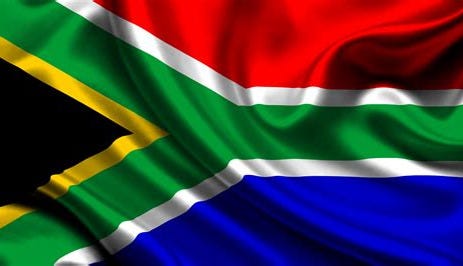
Imagine this. Imagine a country ruled by grey-suited old men, every one of them obsessed with skin colour, believing that dark-skinned people need to be kept as far away as possible, poor, voteless, and subject to a thousand humiliations.
That was South Africa from 1948 on, a paranoid system headed for disaster. So I left. Packed up not long after Steve Biko’s murder in 1976 and escaped to free and orderly New Zealand. Living in the old South Africa meant having your conscience battered daily while watching your beloved country being dragged into conflict by secretive grey-suits. I was a rat leaving a sinking ship.
Outsiders who suggested it was an exceptionally dumb idea to keep most of your population as second class citizens were dismissed as ignorant. ‘You have no right to meddle in our internal affairs’ was a stock response of the grey-suits.
But miracles happened. With a country teetering on the edge of civil war a new leader of the grey-suits gazed into the abyss and changed his mind. Within five tumultuous years, apartheid was dismantled, democratic elections held, Nelson Mandela became the most respected leader on earth, and South African was promoted from pariah to rainbow nation. You could hear the collective sigh of relief across the world.
Many of the events leading up to the 1994 elections were tragic and some were farcical. Some of the most bizarre involved a white supremacist with the improbably perfect name of Eugene Terre’Blanche, a demagogue who founded a neo-Nazi party and aroused in his volk a conviction they should fight to the death against a black takeover.
But insane good fortune lent a helping hand. First, while leading a rally through the streets of Pretoria, Mr TB fell off his white horse, an event whose symbolism was not lost on the public. Second, an investigator spied on him in flagrante with one of his female followers, and reported that Terre’Blanche had a significant number of holes in his underwear.
This presented him with a challenge. Never before has a demagogue been forced to defend the integrity of his underpants in public. He proved unequal to the challenge. The man’s reputation and power base withered away – presumably along with his libido – and the counter-revolution fizzled out. If he’d chosen to wear fully functioning briefs, South Africa could’ve been plunged into civil war. On such events hinged the fate of a nation.
Things became even better. Elections were held, the ruling clique handed over power to the black majority in a sort-of-voluntary way, Nelson Mandela became President, and for the next five years his calm wisdom and moral authority helped guide the country through a dangerous transition. The country’s future didn’t rest entirely in Mandela’s hands. Many others combined to create moral leadership, in particular eternally cheerful Desmond Tutu, who initiated the TRC – the truth and reconciliation commission.
In a rational world, everyone should still be wandering around smiling their heads in wonderment, calling out to each other the good news that South Africa had earned given a fresh start in life, and that black and white now live together in harmony. Well, sort of.
Utopia it is not. Fear still haunts the nation, and it is a truth universally acknowledged that bad news travels better than good news. In the view of many outsiders, Africa remains the natural home of conflict, disease, corruption and poverty. Great wildlife, shame about the politics.
According to Afro-pessimists, African cities are inhabited by a feral underclass eager to shoot you for your cell phone and pounce on any driver foolish enough to stop at traffic lights after dark. If you believed all the rumours, any visitor will be lucky to escape being stabbed, shot, beaten, burned, mugged, road-raged, carjacked, or (for the privileged few) eaten by lions. So it goes
And yet, and yet.
Like anywhere else, most people are good, reasonable, friendly, fair-minded, law-abiding. South Africa remains a dramatic land of wide horizons, flaming sunsets, blue-dome sky, African music, African laughter, resilient can-do attitudes, boundless open space, jackals calling in the night, and the intoxicating aromas of rain on hot earth – the blend of a thousand details that call us home to Africa. I wanted to mingle with people who understood that ‘just now’ rightly means ‘in the near future’ and not ‘in the recent past’. I wanted the primal pleasure that comes from wilderness evenings in the company of elephants. I wanted to see for myself whether the country had experienced a genuine change in mindset and was now guided by Mandela’s example, or whether there had simply been a regime change with enmity lurking beneath the surface like crocodiles.
Also I’ve never been able to listen to Black Mambazo or read the opening lines of ‘Cry, the Beloved Country’ without tears coming to my eyes; (‘There is a lovely road that runs from Ixopo into the hills…’)
Africa is in my bones.